Built the platform from concept. Shipped it. Watched it get acquired.
The Situation
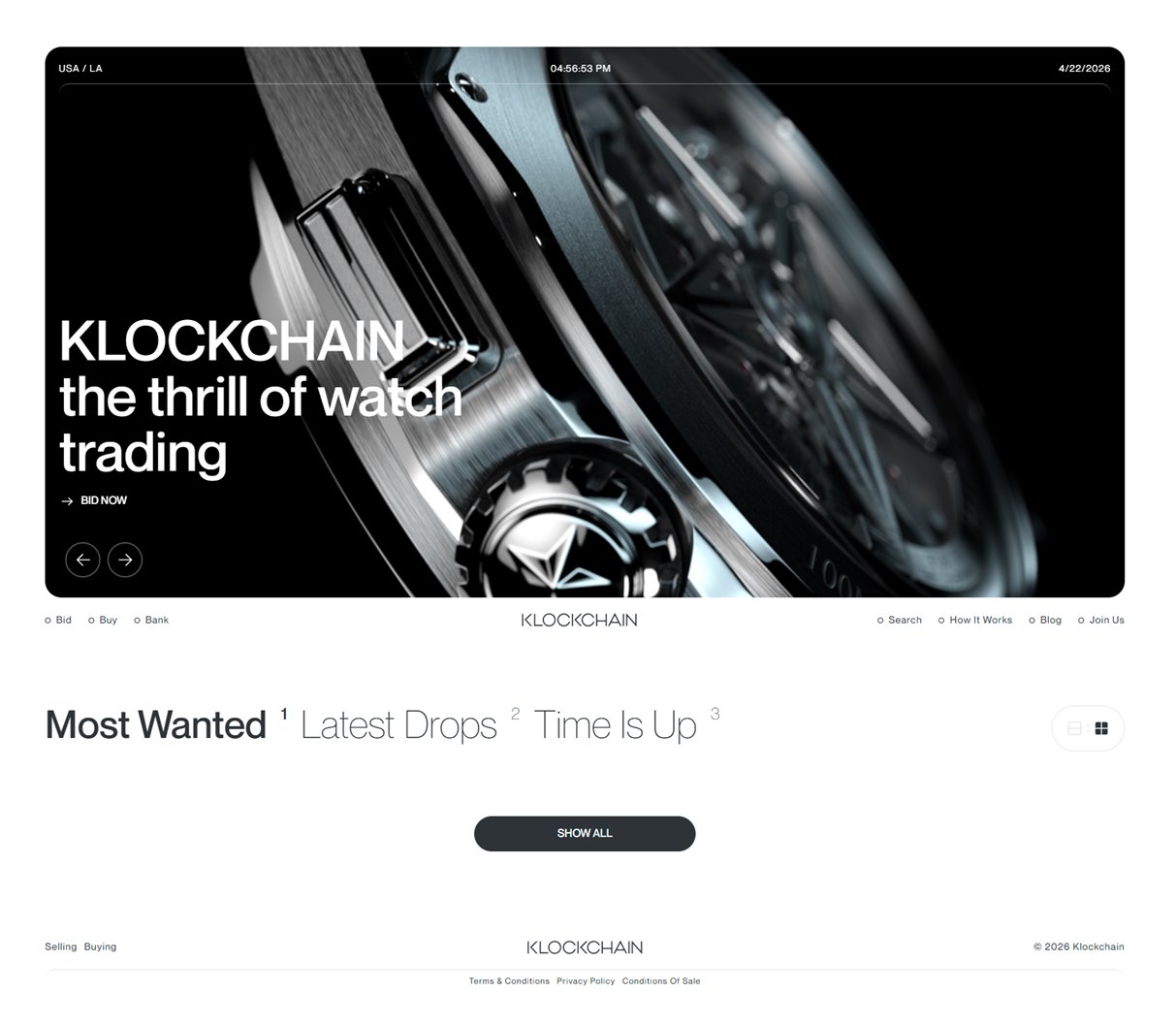
A US-based startup building a luxury watch auction platform — a dedicated, premium home for high-ticket collectors. The vision was something built specifically for that audience: a trustworthy, curated environment for moving serious pieces, at a level the category didn't yet have. We came on as product and delivery leads, owning strategy, structure, and execution from the first conversation through a live, operating auction platform.
The Challenge
- A new category with no established playbook — a premium, vertically-dedicated luxury auction platform built from the ground up
- A product experience that had to feel right for high-ticket collectors — premium, considered, trust-forward
- Scope that touched product, engineering, brand, and partnership logic at the same time, with no single area allowed to slip
- Delivery discipline across a founding team that had the vision but not yet the operating structure to ship it
The Outcome
01
Concept to live platform. Built, launched, and operated. A fully functional luxury watch auction platform, live and running regular drops.
02
Acquired in 2024. The platform was acquired by TF Klockchain Inc. — the full arc of a product built from scratch, through launch, to acquisition.
03
A relationship that kept going. The founders have returned with every product since.